Try to survive, and don’t forget your sunscreen
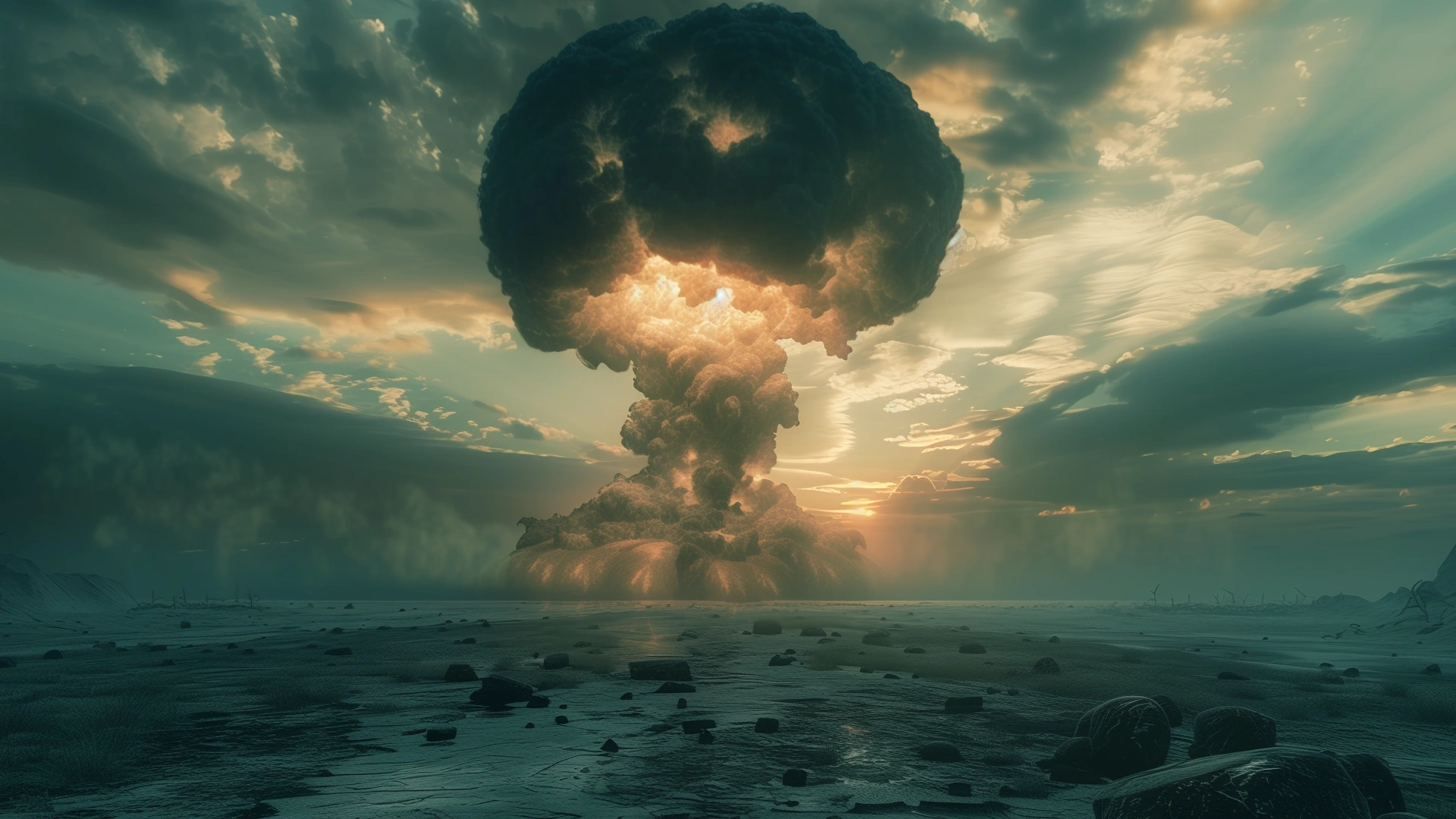
"Little Boy" was the bomb dropped on Hiroshima in 1945, and here's roughly what happened. First, a flash bright enough to blind anyone who looked straight at it, sometimes for good. Then the heat: severe burns for anyone within 2 km, sunscreen obviously not included in the survival kit. The blast came next and leveled almost everything, total flattening up to 1.5 km, crumbling buildings and mass casualties out to 3 km. And then the black rain fell, radioactive dust drifting tens of kilometers out, doing its damage slowly through cancer instead of quickly through blast force. Not exactly a holiday destination, then or for decades after.
Quick answer
- Never look at the flash. Get down behind something solid, away from windows.
- Get inside, and go as deep as you can: a basement, a subway station or an underground parking garage.
- Stay inside for at least 24 hours, and preferably 48, unless the authorities tell you otherwise.
- Listen to the radio for instructions, and only take iodine tablets when you're told to.
How you might not die
Say a bomb is inbound. Don't panic, panicking just wastes the little time you have. If you're standing in the fireball or catch the flash directly, there's nothing to be done, you're gone before you'd even register it. Between 1.5 and 4 kilometers out, though, you've actually got a shot. Get underground: a subway, a parking garage, a cave if you happen to live near one. Staying above ground means the shockwave gets you if the fire doesn't. After that comes the fallout, radioactive dust settling into the air, the water, everything. From there, your job is simple: stay put, seal the space, and wait. The first day is the most lethal, the next few aren't much better, and only after about forty-eight hours do you get a real chance at breathing outside air again.
Want the official version? FEMA, the US emergency agency, sums it up in three steps: get inside, stay inside, stay tuned. Read their nuclear explosion info sheet (PDF).
💡Note: these survival estimates are based on what actually happened in Hiroshima in 1945.
The atom-proof backpack
Under 18, pregnant, or breastfeeding? Pack iodine tablets, they protect your thyroid from radiation. But only take them when the authorities tell you to: taken too early or for no reason, they can do more harm than good. Beyond that: water, food that keeps, warm clothes, and a hand-crank flashlight that doesn't care about EMPs. An old phone is worth keeping too. Wrap it in a metal box with its cable and a power bank, which should soften an EMP's punch, though nothing's guaranteed there. Throw in a radio, a first aid kit, something to cover your face against fallout dust, tape and plastic sheeting for sealing gaps, and basic hygiene supplies. And bring something to read. Even the apocalypse gets boring.
💡Tip: still got an old metal tin lying around? Yes, an old Pokémon card box counts.
Drop a basic phone in there, ideally something ancient like a brick-style Nokia, battery removed and wrapped in cloth or paper.
That tin acts as a makeshift Faraday cage, which should improve its odds against an EMP. No promises, but it beats leaving it out in the open.
Myths that get people killed
Myth: "Nobody survives a nuclear bomb."
In Hiroshima and Nagasaki, tens of thousands of people survived, some of them surprisingly close to the center. Distance and shelter make a huge difference, especially in the first minutes and hours.
Myth: "Jump in the car and drive away from the fallout."
Everyone has the same idea, the roads jam, and a car doesn't protect you from radioactive dust. The official advice: get inside, stay inside, stay tuned.
Myth: "After a nuclear bomb, the area stays uninhabitable for centuries."
Hiroshima and Nagasaki are big, lively cities today. People moved back and rebuilt within a few years. Radiation from fallout drops quickly, which is exactly why staying inside for the first days matters so much.
Myth: "Ducking behind something is pointless."
Further away from the blast, most injuries come from flying glass and debris. Getting down behind something solid, away from windows, can save you a lot of pain.
Myth: "You can hide in a fridge, like Indiana Jones."
You can't. Please don't try.
Be ready before it happens
Nobody wants to think about this one. That's exactly why a little preparation puts you ahead of almost everyone.
- Know where the nearest underground spaces are: at home, at work and at school.
- Find out how your country sounds the alarm, and what the sirens mean.
- Check your emergency kit twice a year: replace water and food before they expire, and test the batteries.
- Live near a nuclear power plant? Check if you're in a zone where iodine tablets are handed out, and where to get them.
- Agree with your family that everyone takes shelter where they are. Don't drive across town to pick up your kids: schools shelter their students too.
- Keep a set of spare clothes in your shelter spot, in case you have to change out of dusty ones.
Real story: the man who survived both bombs
In August 1945, engineer Tsutomu Yamaguchi was on a business trip to Hiroshima. On the morning of August 6, he was about three kilometers from the center when the bomb exploded. He was badly burned and temporarily blinded, but he survived the night in a shelter.
The next day, he traveled home to Nagasaki. On August 9, while telling his boss about the explosion in Hiroshima, the second bomb exploded over Nagasaki, again about three kilometers away. He survived that one too, and lived until the age of 93. He is the only person officially recognized by Japan as a survivor of both bombings.
💡Tip: in Hiroshima, even ordinary clothes blocked part of the heat flash, and light-colored clothes worked better than dark ones. Covered skin is protected skin.
Did you know?
Hiroshima's bombing in August 1945 killed roughly 78,000 people on impact,
with that number climbing to around 140,000 by the end of the year.
Radiation sickness and cancer kept killing people for decades after, and by 2004,
Hiroshima's own city estimates put the total closer to 237,000.
And that was from a 15-kiloton device, a relatively small one by today's standards.
Quick questions
Would there be a warning?
Maybe, maybe not. If there is one, it could come through sirens or an alert on your phone, and it could give you only minutes. That's why knowing your nearest shelter in advance matters more than waiting for details.
Is the food and water in my house still safe?
Food in closed packages and cans is safe: just wipe the dust off before you open them. Bottled water is safe too. For tap water, follow what the authorities say on the radio.
What if I was outside when the dust started falling?
Get inside, take off your outer layer of clothes and put it in a plastic bag. That alone removes most of the radioactive dust. Then shower with soap and shampoo, but no conditioner, or wipe your skin with a wet cloth.
Does a basement really help?
Yes. The more concrete, brick and earth between you and the outside, the better. In a building without a basement, go to the middle of it, away from the roof and the outside walls.