
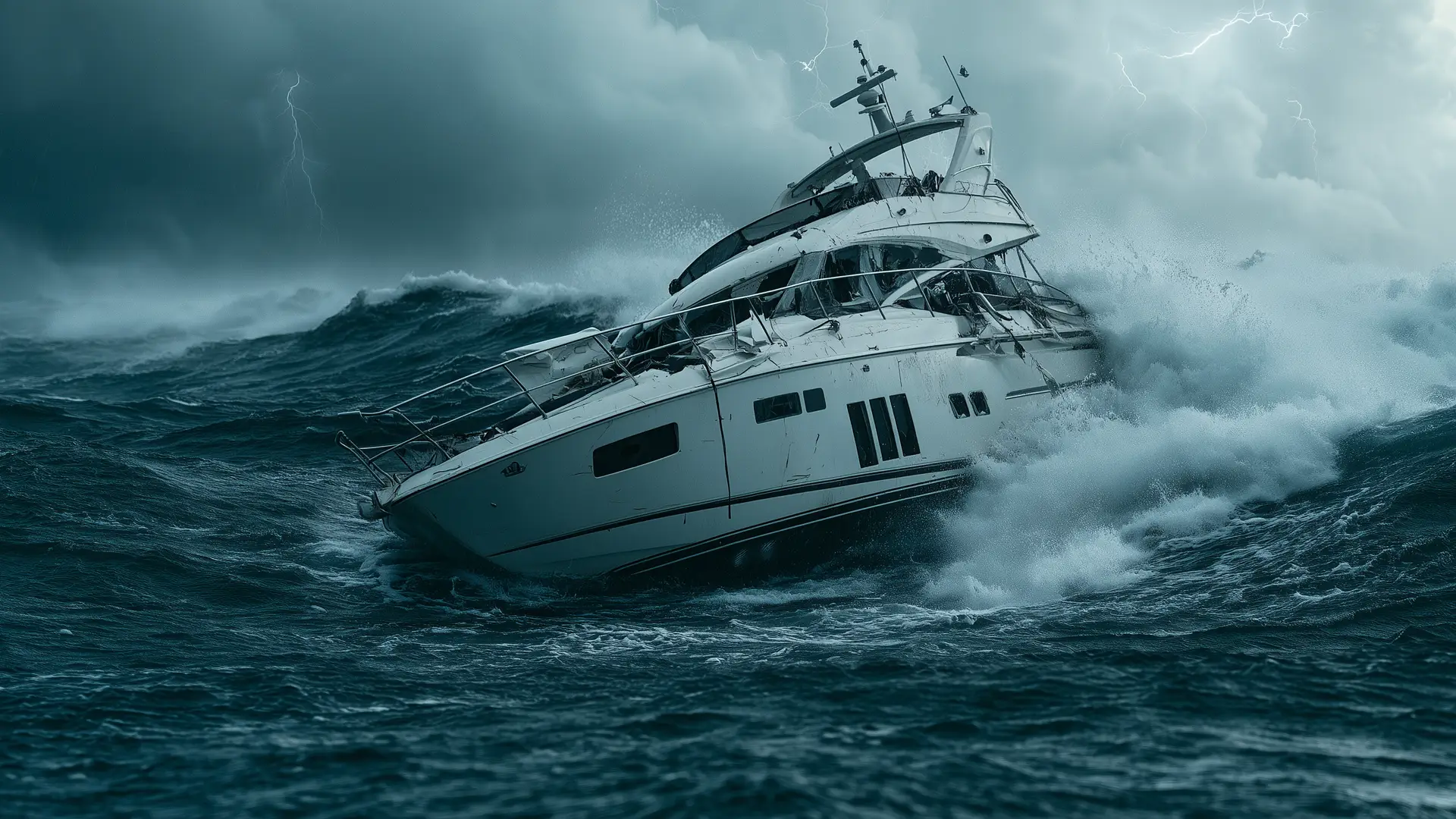
Try to survive, and stay afloat
One moment you're enjoying the sea breeze, the next the deck is tilting, the alarm is screaming and the water is coming in. Boats don't usually sink in seconds, so you have more time than you think. Don't waste it panicking. Grab a life jacket, put it on right away and get to the deck.
Getting off the boat
Stay on board as long as it's safe. A boat, even a damaged one, is easier to spot than a head in the water, and a lot warmer. Follow the crew and get into a life raft if there is one. Only jump when you really have to. If you do, look below you first, cross your arms over your life jacket, hold your nose and go in feet first.
💡Tip: put on warm clothes, even if it feels stupid. Wet clothes still trap some heat, and cold is a bigger danger than drowning in the first hour.
The first minute: float, don't fight
Cold water hits you like a punch. You'll gasp, your breathing goes wild and your body wants to thrash around. Don't. Lean back, spread your arms and legs, and just float until your breathing calms down. That takes about a minute or two. Rescue services call this "Float to Live", and it saves lives every year.
💡Tip: don't try to swim to a coast you can barely see. It's always further than it looks, and swimming drains your heat and energy fast.
Waiting to be found
Stay near the wreck. Rescuers start searching where the boat went down, and floating debris makes you easier to spot. Climb onto anything that floats to get as much of your body out of the water as you can. Alone? Pull your knees to your chest and hug them to keep your heat in. With others? Huddle together. Make yourself visible: wave, blow a whistle, use a mirror or flares if you have them.
💡Tip: never drink seawater, no matter how thirsty you get. The salt dries you out even faster and makes things a lot worse. Collect rainwater instead.
Did you know?
The record for surviving alone on a raft at sea belongs to Poon Lim, a steward on a British merchant ship that was sunk by a submarine in 1942. He drifted across the Atlantic for 133 days, living on rainwater, fish and seabirds, until fishermen found him off the coast of Brazil. When he heard it was a record, he said he hoped nobody would ever have to break it.