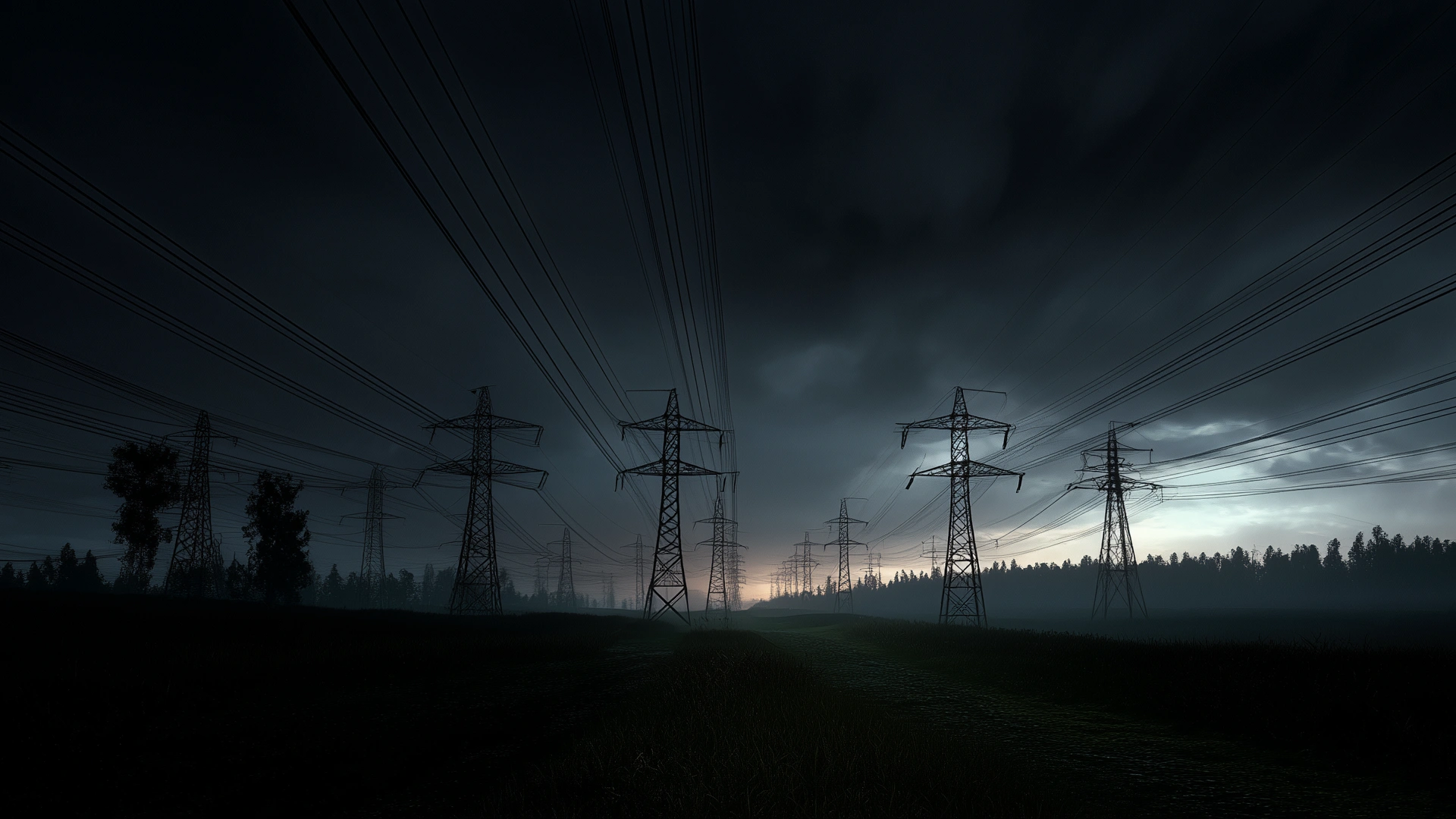
Try to survive, in the darkness…
The moment the power cuts, everything feels different. No streetlights, no background hum of the grid, just quiet and dark. Your first move should be finding light, any light. A flashlight, a candle, even a fully charged phone. It matters more than you'd think. Just never leave a candle burning unattended or near curtains: a house fire is the last thing you need right now.
Quick answer
- Find light first: a flashlight or a charged phone. Be careful with candles.
- Keep the fridge and freezer closed.
- Eat and drink what doesn't need power: cans, dry food and bottled water.
- Never use a barbecue, generator or gas heater indoors.
- Stay home, keep your doors shut, and listen to a battery radio for news.
Water and food
Fridges die, water pumps stop, and within a few hours you realize just how much of your life runs on electricity you never think about. Keep a small stash that doesn't need power: bottled water, canned goods, anything dry that lasts.
💡Tip: keep the fridge and freezer shut. Every time you open the door, you let the cold out, and that cold is the only thing keeping your food edible right now.
Surviving in the darkness
A long blackout turns you into a target, whether you like it or not. Desperation spreads fast, and chaos usually follows close behind. Keep your doors shut, stay put, and don't burn energy you might need later.
💡Tip: stash a power bank or spare batteries somewhere separate from the rest of your gear. One working lamp can do a lot for your nerves on the first few nights.
Myths that get people killed
Myth: "A blackout only lasts a few hours."
Most do. But after a big storm or a failure in the grid, it can take days, sometimes longer, before everyone has power again. Prepare for three days, and be glad if you don't need it.
Myth: "Everything in the freezer is ruined after a few hours."
If you keep it closed, a full freezer keeps food frozen for about two days, a half-full one for about one day. The fridge is the weak spot: it only stays cold for about four hours.
Myth: "Just heat the house with the gas oven or a barbecue."
That's how people get carbon monoxide poisoning: a gas you can't see or smell, that can kill you in your sleep. Stay warm with layers and blankets instead.
Myth: "The tap water will keep running."
Not always. Water systems also need electricity, and people on higher floors often lose water first. Keep some bottled water at home.
Myth: "My phone will keep working like normal."
Cell towers have backup batteries, but those only last for a while, and the network gets overloaded when everyone calls at once. Keep calls short and send texts instead.
Be ready before it happens
A blackout is the most likely disaster on this whole website. The good news: it's also one of the easiest to prepare for.
- A battery or hand-crank radio, so you still get news when your phone dies.
- Is a storm or heatwave on the way? Fill a few bottles with tap water, just in case.
- Some cash. When the power's out, card machines and ATMs don't work.
- Keep your car's tank at least half full: gas stations need electricity to pump fuel.
- Write the phone numbers that matter down on paper.
- Know how to open your electric garage door or gate by hand.
- Does someone at home depend on medical equipment? Make a backup plan with their doctor.
Real story: the day 50 million people lost power
On August 14, 2003, a software bug stopped an alarm system at an energy company in Ohio from working. Nobody noticed that overloaded power lines were sagging into trees and shutting down. Within minutes, one failure caused the next, until around 50 million people in the United States and Canada were without power.
In New York City, subways stopped, traffic lights went dark and hundreds of thousands of people walked home across the bridges. Many slept outside because their apartments were too hot. Strangers stepped in to direct traffic at dark intersections. In most places, the power came back within a day or two.
💡Tip: during a long blackout, check on older neighbours and people who live alone. In a heatwave or a cold snap, they're the ones most at risk.
Did you know?
The biggest blackout in history hit India on July 30 and 31, 2012. Over 620 million people, close to 9% of the entire planet at the time, lost power in one go. Trains stopped dead, hospitals switched to backup generators, and whole cities just shut down.
Quick questions
How do I stay cool during a summer blackout?
Keep the curtains closed during the day, and open the windows at night when it's cooler. Stay on the lowest floor, drink plenty of water, and cool down with a wet cloth on your neck.
Is it safe to use a generator?
Only outside, far away from windows, doors and air vents. Never in your house or your garage, not even with the door open: the exhaust fumes contain carbon monoxide.
Can I still call the emergency number?
Usually, yes. Mobile networks keep working for a while on backup power. Keep your calls short so you don't overload the network, and save your battery.
What should I do when the power comes back?
Don't switch everything on at once. During the blackout, unplug sensitive devices like your computer and TV, so a power surge can't damage them when the electricity returns.