
Try to survive, and don't shake your clothes off
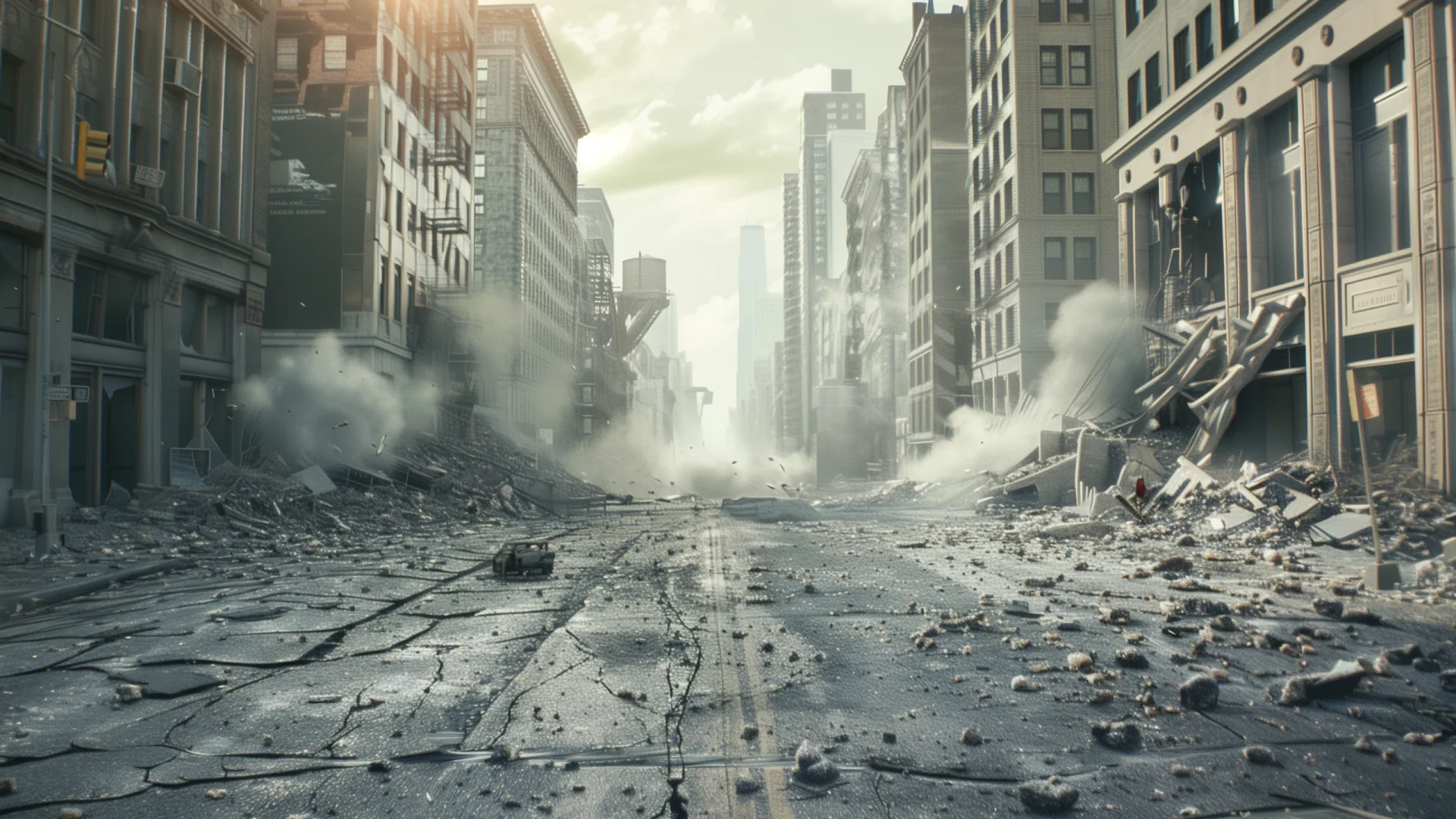
Houses are collapsing like dominoes, apartments are losing their grip on the ground, and streets are exploding for some reason. You turn on the TV or the radio, and they say there’s an earthquake. Seriously? An earthquake? Thanks for the useless info, but what am I supposed to do now?
Quick answer
- Drop to your hands and knees, take cover under a sturdy table, and hold on until the shaking stops.
- Stay where you are. Don't run outside while the ground is still shaking.
- Stay away from windows, mirrors and heavy furniture that can fall.
- Once it stops: expect aftershocks, and stay away from damaged buildings.
Take cover
First, get down on your hands and knees, so the shaking can't knock you over like a domino. Then find something to hide under. A sturdy table or desk is your best bet. A plastic garden table won't protect you much, so skip that one. Stay away from windows, and from big, heavy furniture like bookcases and wardrobes, because they can fall on you. Stay under your cover until the shaking stops.
💡Extra tip: Do you happen to have a sturdy table or desk? If you can take shelter underneath it, hold onto a leg so you shake along with the table. That way, you’ll move with it instead of the table shaking away from you and leaving you unprotected.
Help, my house is falling apart like a house of cards
In this case, you have little to no control over the situation... too bad for you. Suppose you’ve miraculously survived but are trapped under the rubble. Stay calm. Yes, you can shout for help, but keep in mind that you’ll inhale dust and that oxygen levels are limited. What you can do in these situations is cover your mouth and nose with your sleeve, a cloth, a curtain… It doesn’t matter what, as long as you keep it covered. Want to be heard? Tap on walls, debris or pipes, anything that makes a sound. These methods will increase your chances of survival.
💡Extra tip: If you’ve managed to find a way to escape from what’s left of your home, make sure to keep a safe distance from any standing walls, roofs, etc. Be aware of aftershocks.
I can help someone, but I don't know where to start
Well, before you start playing the hero, first check whether the surroundings are safe enough to approach the person who needs your help. Can’t call emergency services? Don’t worry. There are plenty of things you can do on your own to make sure the person in question is okay... or not. Talk to him or her and check the victim’s breathing for 10 seconds. Is their breathing normal? Then don’t worry. Is there heavy bleeding? Is there a lot of blood loss? Make sure you can stop the bleeding with a cloth or whatever you have on hand while you try to reach emergency services. Finally, keep the person lying down or sitting as much as possible. You don’t know what injuries they might have.
💡Extra tip: Safety first, then assistance.
Myths that get people killed
Myth: "Stand in a doorway, that's the strongest part of the house."
In some old houses that was true. In most modern homes, a doorway is no stronger than the rest, and a swinging door can hit you hard. A sturdy table protects you much better.
Myth: "Run outside as fast as you can."
Most injuries happen to people who move around while it's shaking: they fall, or get hit by glass and pieces of facade on their way out. Stay inside and take cover until it stops.
Myth: "Forget the table, lie down next to furniture in the 'triangle of life'."
That idea went viral in chain emails, but rescue organizations like the Red Cross advise against it. The official advice is still: drop, cover and hold on. Want it straight from the source? Read the American Red Cross earthquake guide.
Myth: "The ground opens up and swallows people."
That's Hollywood. The ground can crack, but not into giant chasms that swallow cars and people. The real danger is falling objects and collapsing buildings.
Be ready before it happens
Earthquakes don't send an invitation. The good news: most of the preparation takes one afternoon, and you only have to do it once.
- Fix tall furniture, bookcases and your TV to the wall.
- Don't hang heavy mirrors or picture frames above your bed.
- Pick your safe spot in every room: a sturdy table or desk, away from windows.
- Keep shoes and a flashlight next to your bed. After a quake at night, the floor will be covered in glass.
- Put together an emergency kit: water for at least three days, food that keeps, a first aid kit, a whistle, a radio and a power bank.
- Find out where to shut off your gas and water.
- Practice drop, cover and hold on once with the people you live with. It feels silly, but it makes it automatic.
Real story: the miracle babies of Mexico City
On September 19, 1985, a magnitude 8.0 earthquake hit Mexico City. Thousands of buildings were damaged or destroyed, including hospitals. In the days that followed, rescuers kept digging, and they kept finding survivors.
Among them were several newborn babies, pulled alive from the rubble of a collapsed hospital, some of them almost a week after the quake. They became known as the "miracle babies". Since then, Mexico holds a huge national earthquake drill every year on September 19. In 2017, a real earthquake hit on that exact date, just hours after the drill.
💡Tip: rescue teams keep searching for days. If someone you know is missing, tell the rescuers exactly where that person was when the quake hit. That's where they start digging.
Did you know?
That the strongest earthquake ever recorded by seismic instruments had a magnitude of 9.5? It occurred on May 22, 1960, in Chile and is known as the Great Chilean or Valdivia Earthquake. The fault zone was nearly 1,600 km long.
Quick questions
How long does an earthquake last?
Most earthquakes last from a few seconds to under a minute. The really big ones can shake for several minutes: the 2004 Sumatra earthquake went on for around eight to ten minutes. It also caused the huge Indian Ocean tsunami.
What if an earthquake hits while I'm in bed?
Stay in bed. Lie face down and protect your head and neck with a pillow. Getting up in the dark, on a shaking floor that's covered in glass, is more dangerous.
What if I'm driving?
Pull over somewhere away from bridges, overpasses, trees and power lines. Stop, and stay in the car with your seatbelt on until the shaking stops.
What if I'm outside?
Move away from buildings, streetlights and power lines if you can, then drop to the ground and protect your head and neck with your arms until it stops.