
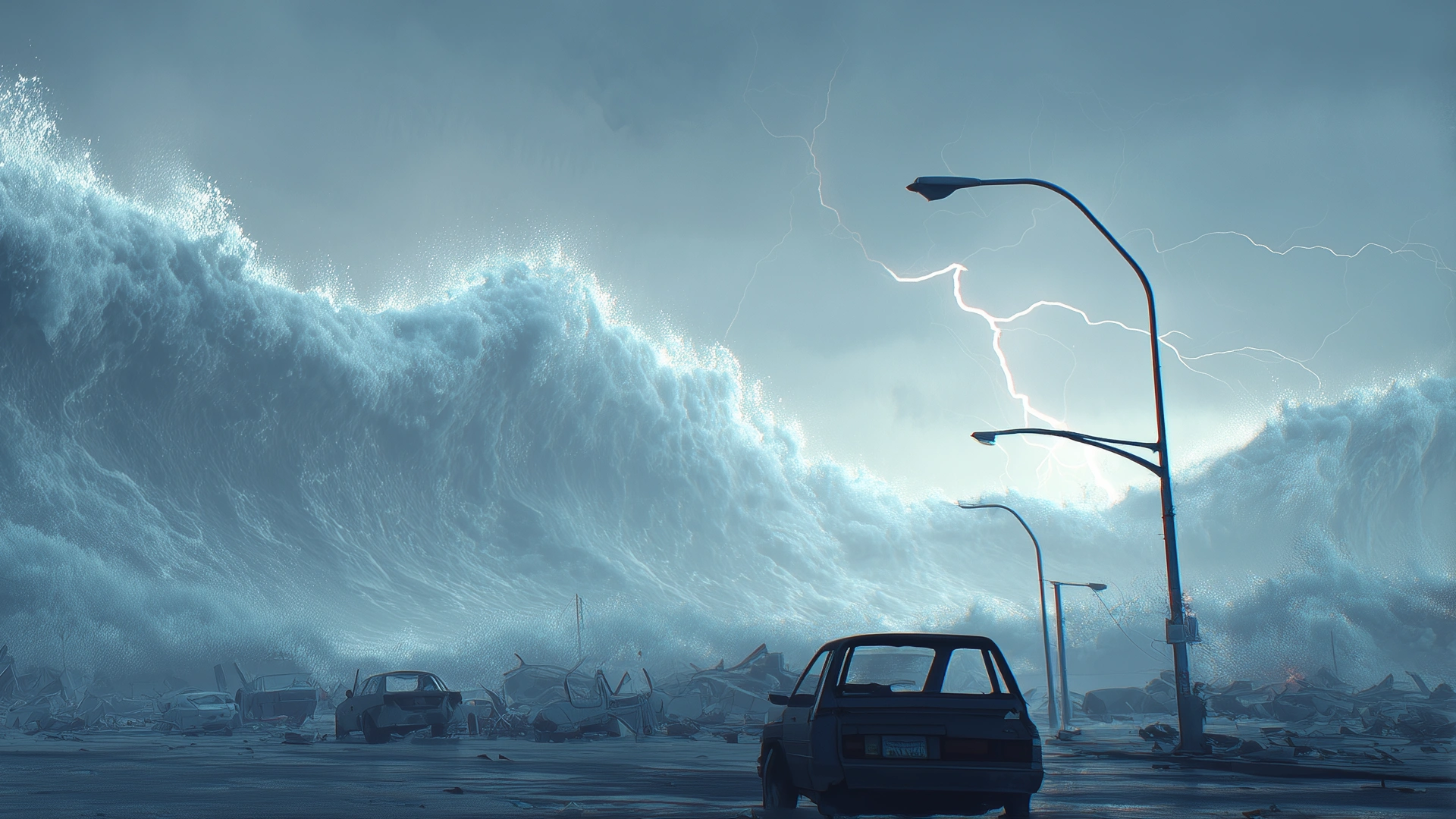
Try to survive, and don’t forget to breathe.
Say you're just out in the garden, or working the front desk of some apartment building. Then the sirens go off, and someone announces you've got five minutes before a wave hits. Five minutes. What do you do? You get up, immediately, and you climb. That's not me guessing, that's literally what emergency services tell you. If you've genuinely got a few minutes to spare, grab water, some food, a light source, and go. With just that, you can hold out two to five days on a rooftop, an apartment block if you're lucky, your own house if you're not. No roof available? Find a tree that looks like it means business and hang on.
Quick answer
- A strong earthquake near the coast, or the sea suddenly pulls back? Don't wait for a siren. Go.
- Get as high as you can, as fast as you can: a hill, or the upper floors of a strong concrete building.
- Stay there. A tsunami is a series of waves, and the first one is often not the biggest.
- Never go down to the beach to take a look.
Patience pays off... they say.
Easy to say, brutal to actually do. Once the water's moving, you're not saving anyone, including yourself if you're not careful. See someone getting dragged under? Awful as it sounds, you let it happen. It's every person for themselves now. Help only if you're completely certain it won't cost you your own life too, because a second body in the water doesn't help the first one.
💡Tip: grab a small first aid kit if you can. Debris in moving water will cut you up, and a wound you can't treat is its own emergency.
Preparing
If you're lucky, a warning gives you a couple of minutes before the wave actually arrives. Use every second. Get sturdy clothes on: long pants, a jacket, boots, anything that stands between your skin and whatever's about to be flying through that water.
💡Tip: keep something that floats within reach. A plank, an empty barrel, even a door works. It buys you minutes, sometimes hours, once you're actually in the water.
Myths that get people killed
Myth: "The sea is pulling back, let's go and have a look."
When the water suddenly drains away and the seabed appears, the wave is only minutes away. People who walked out to pick up stranded fish in 2004 didn't have time to get back.
Myth: "It's one big wave, and then it's over."
A tsunami is a series of waves that can keep coming for hours, and the first one is often not the biggest. Stay high until the authorities say it's safe.
Myth: "I'll just jump in the car and drive away."
Everyone has the same idea, and the roads jam within minutes. If high ground is close by, going up on foot is often faster than driving away.
Myth: "It's just a wave, a good swimmer can handle it."
A tsunami isn't a wave you can dive under. It's the whole sea moving inland, full of cars, trees and broken houses. Nobody swims through that.
Be ready before it happens
Live near the coast, or going on a beach holiday? Five minutes of preparation now saves the five minutes you won't have later.
- Check if your home, hotel or holiday spot is in a tsunami zone, and look out for the evacuation signs.
- Know your route to high ground on foot, and walk it once.
- Learn the natural warning signs: a strong or long earthquake, the sea suddenly pulling back, or a loud roar coming from the ocean.
- Travelling? Save the local emergency number of the country you're visiting in your phone.
- Agree on a meeting point with your family, somewhere high, in case you get separated.
- Turn on emergency alerts on your phone, and when travelling, find out how the local warning system works.
Real story: the girl who saved a beach
On December 26, 2004, ten-year-old Tilly Smith was on holiday with her family on Mai Khao beach in Phuket, Thailand. Just two weeks earlier, she'd had a geography lesson about tsunamis at school in England.
When she saw the sea start to bubble and pull back strangely, she recognized the signs and told her parents a tsunami was coming. Her parents warned the hotel staff, and the beach was cleared just before the wave hit. Around a hundred people on that beach survived because a ten-year-old paid attention in class.
💡Tip: teach your kids the warning signs too. Tilly's story proves that knowing them can save a whole beach.
Did you know?
The December 26, 2004 tsunami in the Indian Ocean started with a 9.1-magnitude earthquake.
The waves that followed hit 30 meters high and moved at roughly 800 km/h, about the cruising speed of a passenger jet.
👉 It killed more than 230,000 people across 14 countries.
Quick questions
How much warning do you get before a tsunami?
That depends on where the earthquake happened. If it's close to your coast, the wave can arrive within minutes, sometimes before any official warning. If it's far away, you can have hours. That's why a strong earthquake at the coast is your warning: don't wait for a siren.
How high do I need to go?
As high and as far inland as you can. A common rule of thumb is at least 30 meters above sea level or 3 kilometers inland, but always follow the local evacuation signs. Can't get there in time? The upper floors of a strong concrete building are your last resort.
How long does a tsunami last?
Hours. Several waves can arrive with long pauses in between, and a quiet moment doesn't mean it's over. Stay away from the coast until the authorities give the all-clear.
Can you outrun a tsunami?
Not once it reaches the shore. Even on land, the water can move faster than you can run. You don't outrun a tsunami, you get above it, and you start moving before you can see it.